

Hey there, if you’ve ever spent time around diesel gensets—whether you’re a facility manager, a small business owner, or someone who relies on backup power during outages—you’ve probably heard the term “power factor” thrown around. It’s one of those technical specs that sounds confusing at first, but once you get it, it makes a huge difference in how you pick the right diesel generator for your needs. As a diesel genset supplier, I get asked about power factor all the time, so let’s break it down in plain talk, no jargon overload.
First off, what even is power factor? Let’s keep it simple. Electricity doesn’t just flow straight from the generator to your devices—some of it is used to create magnetic fields in motors, transformers, and other inductive equipment, right? That magnetic field is essential for those things to work, but it doesn’t actually do any “real” work like powering your lights, heating your space, or running your tools. Power factor is the ratio between the real power (the actual work power, measured in kilowatts or kW) and the apparent power (the total power the generator has to supply, measured in kilovolt-amperes or kVA). Think of it like a pizza: if the whole pie is the apparent power, the slice you actually eat (real power) is the power factor. A perfect power factor is 1, meaning you get the whole slice every time—but in the real world, it’s usually between 0.8 and 0.9 for most applications.
Now, why does this matter for diesel gensets? Let’s say you’re looking at two gensets: one rated at 100 kVA with a power factor of 0.8, and another also 100 kVA but with a power factor of 0.9. The first one can deliver 80 kW of real power, while the second can push out 90 kW. That’s a 10% difference in usable power from the same-sized unit—big deal, right? If you’re running a shop with multiple motors, refrigeration units, or other inductive loads, picking a genset with a higher power factor means you don’t have to oversize it to meet your needs, which saves you money on upfront costs, fuel, and maintenance over time.
Wait a second, I should note that most standard diesel gensets come with a rated power factor of 0.8. That’s the industry norm for a reason—It balances efficiency, generator size, and cost pretty well for most general applications. But if you have specialized loads, you might need something different. For example, if you’re dealing with high-voltage equipment, your power factor requirements might be tighter, or you might benefit from a genset designed to handle higher power factors. That’s where options like High Voltage Diesel Generator models come into play—those units are built for heavy-duty, large-scale operations where consistent, high real power delivery is non-negotiable.
Let me give you a real example from a client of mine last year. They were a small manufacturing shop with a bunch of 5-horsepower motors and some lighting, and they initially looked at a 75 kVA genset with a 0.8 power factor. But when we mapped out their peak load, their real power needed was around 55 kW. With the 0.8 PF unit, 75 kVA would give them exactly 60 kW, which should’ve worked… but they forgot about a new CNC machine they were adding, which is an inductive load that would lower the overall system power factor. So their actual usable power dropped, and they almost ended up overloading the genset. We ended up suggesting a slightly larger unit or checking if they could add power factor correction equipment, but it was a good reminder that you can’t just look at kVA—power factor is critical.
Now, what affects the power factor of a diesel genset itself? A few things, actually. The generator’s design (the alternator type, the winding configuration) plays a big role. Older gensets might have lower power factors, while newer models with advanced alternator tech often hit that 0.8 mark consistently, and some go higher. The load you’re connected to also affects it—like I mentioned earlier, inductive loads pull down power factor, while resistive loads (like space heaters or incandescent lights) are closer to 1. So if your genset is running at part load, that can also lower its power factor a bit—gensets are most efficient (and run at their rated power factor) when they’re operating at 70-80% of their rated capacity.
Here’s something else I get asked a lot: can you adjust the power factor of a diesel genset? The short answer is, not directly. The genset’s power factor is tied to its design, but you can adjust the overall system power factor by adding power factor correction (PFC) equipment—capacitors that offset the reactive power from inductive loads. That way, you can make sure you’re getting the most out of your genset’s real power capacity. For example, if you have a genset with 0.8 PF, adding PFC can bring your system power factor up to 0.9 or higher, letting you use more of the genset’s real power without upgrading to a bigger unit.

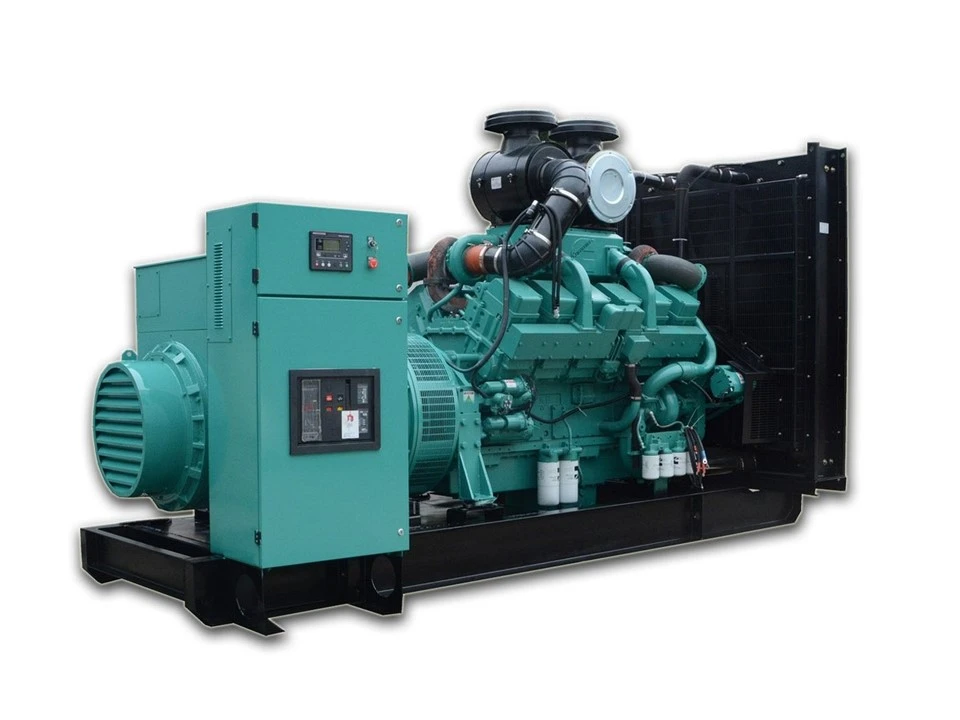
When you’re shopping for a diesel genset, don’t just get hung up on the kVA number. Ask about the rated power factor, and make sure you calculate your total real power needs, including any inductive loads and the potential for future additions. Let’s talk about some of the gensets we carry here—for example, the Launtop Diesel Generator is a popular mid-range option with a reliable 0.8 power factor, perfect for small businesses, construction sites, or residential backup power. If you need something more portable for jobs that require moving power around, the Generac Portable Diesel Generator is designed with a solid power factor and compact build, so you get consistent real power no matter where you are. For those needing heavy-duty, high-voltage power for industrial or large commercial applications, the High Voltage Diesel Generator line we offer is engineered for higher power factors and longer run times under heavy loads. And if you’re looking for a specific model with specific specs, like the Tpi 7000 Lxh Diesel Generator, it’s got a 0.8 power factor and is great for small to medium fleets or equipment yards. We also carry Dometic Diesel Generator units that are tailored for reliable backup power in tight spaces, with a stable power factor that’s easy to work with for most home and light commercial use cases.
I’ve seen too many people make the mistake of buying a genset based just on kVA, then running into issues because they didn’t account for power factor. A client a couple years back went with a cheaper 100 kVA genset with a 0.7 PF, thinking it was the same as a 100 kVA 0.8 PF unit. But in reality, they only got 70 kW instead of 80 kW, and their shop’s load was 75 kW—so they were running the genset almost at full capacity all the time, which hurt fuel efficiency and led to more maintenance calls. That’s why I always tell customers to calculate real power needs first, then match that to a genset with a power factor that fits.
Another thing to note: power factor isn’t just about efficiency, it’s also about compliance and protecting your equipment. If your genset is operating at a low power factor, it’s working harder to supply the same real power, which can cause more wear and tear on the engine and alternator over time. Higher power factor means less strain on the genset, so it lasts longer, uses less fuel, and has lower operating costs. That’s a win-win for everyone.
Wait, let’s clarify a common mix-up: power factor for the genset vs. power factor for your load. The genset’s rated power factor is what it’s designed to supply at its maximum capacity, while the load’s power factor is how your equipment uses that power. When they’re matched properly, you get the best performance. If your load has a low power factor, you can either add PFC or pick a genset that can handle that lower factor without being overloaded. It’s all about balancing those two numbers.
I know this might feel like a lot to wrap your head around, but it’s really not that complicated once you practice. The next time you’re looking at gensets, jot down your total real power (add up the kW of all your equipment, not just the kVA), then look for a genset whose rated real power (kVA x PF) is a little higher than that number—about 10-15% extra for future load growth, just to be safe. That way, you won’t end up underpowered or paying for a bigger genset than you need.
As a supplier, my job isn’t just to sell you a genset—it’s to make sure you get the right one for your needs. Power factor is one of those specs that’s easy to overlook but can make or break your genset’s performance. Whether you’re a small business owner needing a backup for your office, a contractor powering construction sites, or an industrial manager looking for heavy-duty power, taking the time to understand power factor will save you money, hassle, and headaches down the line.
If you’re ready to talk about what power factor works for your setup, or want to check out the options we have—from the reliable Launtop Diesel Generator to heavy-duty High Voltage Diesel Generator models, portable Generac Portable Diesel Generator units, or the specific Tpi 7000 Lxh Diesel Generator or Dometic Diesel Generator—just reach out. We can walk through your needs, break down the specs in plain talk, and help you pick the perfect genset that fits your budget and your power needs. Don’t guess when it comes to power—get the facts, and get a genset that works for you.
References
- Diesel Power Magazine. (2022). Understanding Power Factor in Diesel Generators: A Practical Guide for Facility Managers.
- Electrical Technology. (2023). Power Factor Basics and Its Impact on Generator Sizing.
- International Energy Agency. (2021). Diesel Generator Efficiency and Power Quality Considerations for Commercial and Industrial Applications.
- Generac Power Systems. (2022). Generator Specs 101: Power Factor, kVA, and kW Explained.
- National Electrical Manufacturers Association (NEMA). (2020). Standards for Diesel Generator Set Power Ratings and Power Factor.