

If you’ve ever stood in a server room watching red flashlights bounce off rack after rack of blinking hardware during a blackout, you know what’s at stake when backup power fails. For 12 years, my team and I have supplied generators to data centers, hospitals, manufacturing plants, and remote construction sites across the U.S.—and one thing we drill into every client, and every new member of our crew, is that a generator isn’t just a tool to turn on lights. It’s a safety asset. The features that keep a generator running during an outage, and keep the people and equipment around it safe, are the same ones that prevent small issues from turning into costly, dangerous disasters.
Let’s start with the basics that non-negotiable for every generator we ship: fuel management systems. You’d be surprised how many standard generators skip the level of precision that matters for critical environments. We install both float-type fuel level sensors and pressure-based leak detection lines across all our models. The sensors don’t just tell you how much fuel is left—they trigger an alert if levels drop below a pre-set threshold, so clients can refuel before a long outage, not after. The leak detection lines run through the entire fuel delivery path, from the storage tank to the engine. If even a tiny crack develops in a line, the system picks up the evaporating diesel before it can pool on the ground, become a fire hazard, or seep into soil. This isn’t overkill; in 2021, we had a small industrial client who caught a pinprick leak on a 500kW generator 45 minutes after an outage started. A traditional generator without leak detection would have spilled more than 20 gallons of diesel in the remaining 7 hours of their grid outage—enough to trigger a hazardous materials callout and shut down their plant for two extra days. That’s the kind of avoidable risk our safety features eliminate.
Next, we can’t talk about generator safety without covering overcurrent and short circuit protection, which is non-negotiable for any application that’s powering life-sustaining or high-value equipment. Every generator we install has a built-in digital protection relay that monitors current flow every millisecond. If a short circuit hits, or current spikes beyond the engine’s rated capacity, the relay doesn’t just shut the whole generator off abruptly—it sequences a controlled shutdown to avoid damaging both the generator and the connected loads. For data centers, this is make-or-break. We’ve had clients who tested their backup power by simulating a grid outage mid-day, and the only thing that prevented server crashes was our generator’s protection system kicking in seamlessly. If you’re looking for models tailored to data center needs, take a closer look at our Data Center Continuous Power Diesel Generator, engineered to keep critical infrastructure online without interruption even during the most demanding grid failure scenarios.
One feature that gets less attention than it deserves, especially for indoor generator installations, is ventilation and exhaust safety. Generators produce carbon monoxide, which is odorless, deadly, and can fill an enclosed space in minutes. All of our generator packages come with either natural ventilation systems sized for the model’s output or direct exhaust venting to the outside, with thermal insulation on all exhaust lines to prevent fires from hot pipes. We also integrate CO detectors that are wired directly to the generator’s control panel—if CO levels hit 50 parts per million (ppm), the generator will shut itself down and trigger a building alarm before anyone inside is at risk. A few years ago, we installed a generator in a small hospital’s basement that was scheduled for a routine service the next week. A defective vent flap got stuck, and by the time the building’s CO detector picked up the leak, our generator’s own system had already shut it down automatically. The service team caught the issue before anyone was exposed to hazardous levels. That’s the kind of small, life-saving detail we build into every unit.
Temperature control is another core safety feature, and it’s not just about keeping the generator from overheating. Generators run at peak efficiency within a narrow temperature range—too hot, and parts wear out prematurely; too cold, and fuel can gel, or the engine won’t start when you need it most. All our models have dual temperature monitoring: one at the engine block, another at the exhaust manifold. If temperatures climb beyond safe limits, the system will trigger a series of responses—first, it will adjust the engine’s load to reduce heat, then if that doesn’t work, it will throttle back gently, and finally shut down completely to prevent engine damage. For cold climates, we include block heaters and coolant warmers as standard, so generators start reliably in temperatures as low as -20°F without risking damage to the engine. For applications where even a single minute of downtime isn’t allowed, our Data Center Critical Load Diesel Generator is designed with redundant temperature monitoring and backup heating systems, so you never have to worry about a cold start when the grid goes out.
We also prioritize safety for our technicians and clients during installation and maintenance, not just when the generator is running. All of our generators come with lockout/tagout (LOTO) points that meet OSHA standards, so when a service team is working on the unit, they can lock out the fuel and power sources to prevent accidental startup. The control panels are sized to be accessible from the front, with clear, color-coded labels for every function, so anyone who needs to operate the generator in an emergency doesn’t have to guess what each button does. We also include a remote monitoring portal with every generator, so clients can check fuel levels, run time, error codes, and performance from their phone or office computer, no on-site visit required. This means if an alert pops up, a maintenance team can respond before the generator is even called to run during an outage. If you need a system that integrates seamlessly with your existing data center monitoring infrastructure, our Data Center UPS Backup Diesel Generator is designed to work hand-in-hand with your UPS units, so power transitions happen without any disruption to your servers or network.
Let’s talk about load bank testing—this is a feature that’s not technically a permanent part of the generator, but it’s a critical safety practice we include for all our clients. A load bank simulates the full electrical load the generator would carry during a real outage, so we can test every safety feature, fuel system, and control panel before the generator is put into service. We do a full load test for every unit we install, and we also provide annual load test services as part of our maintenance packages. In 2022, a regional e-commerce client of ours skipped a load test on their old generator, and during a storm that knocked out the grid for 18 hours, the generator could only carry 60% of the required load—their order processing servers crashed, costing them an estimated $200,000 in lost sales. Since switching to our generators, they’ve done two full load tests, and both times the system performed exactly as expected. For data centers that need 24/7 power, our Data Center Power Backup Diesel Generator is built to handle 100% of your site’s critical loads, with built-in load sequencing to prevent surges that could damage your equipment.
Emergency shutdown protocols are the final layer of safety we build into every generator. We include both local push-button emergency stops at the generator unit and remote emergency stops wired to the building’s security or fire alarm system. If a fire alarm goes off, the generator will shut itself down automatically, and the fuel supply will be cut off, to prevent the generator from contributing to a fire. We also program the control panel to alert the local fire department if a generator is running during an emergency, so they know not to approach the unit unnecessarily. For facilities where emergency response is time-sensitive, our Data Center Emergency Backup Diesel Generator is engineered to start in 10 seconds or less, with pre-programmed shutdown sequences that comply with NFPA and local safety codes.

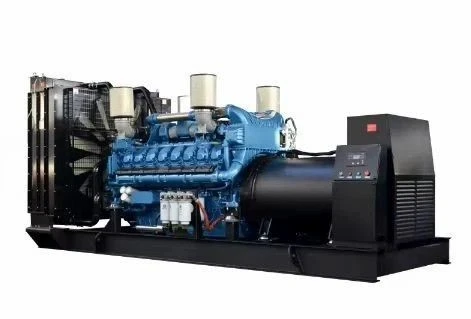
I’ve spent 12 years in this business, and the number one question clients ask isn’t about how much power a generator produces—it’s about how safe it is. A generator is only as good as its ability to keep running when you need it, and to not cause more problems than it solves. The features I’ve talked about today aren’t just specs on a sheet of paper—they’re the result of dozens of hours of testing, feedback from thousands of clients, and a commitment to putting safety before every other consideration. If you’re shopping for a generator, don’t just look at power output or price. Ask about the fuel leak detection, the overcurrent protection, the CO monitoring, the temperature control, and the emergency shutdown protocols. The generator you choose will power your most valuable assets, so it’s worth investing in one that’s built to keep everyone safe.
If you’re ready to learn more about how our generators can meet your specific power needs, we’d be happy to walk you through our models and discuss how our safety features can protect your facility. Whether you need power for a data center, a hospital, or a manufacturing plant, we have the expertise to match you with the right unit.
References:
National Fire Protection Association (NFPA) 110: Standard for Emergency and Standby Power Systems
Occupational Safety and Health Administration (OSHA) 29 CFR 1910: General Industry Safety and Health Standards
U.S. Environmental Protection Agency (EPA) Diesel Engine Emissions Standards for Stationary Generators